You've just finished a solid morning run. You're standing in your kitchen, still catching your breath, and that familiar question pops into your head: “Is it better to have protein before or after my workout?” Or maybe you're the person who grabs a protein bar on the way to the gym, wondering if you're doing it all wrong.
If protein timing feels confusing, you're not alone. The internet is flooded with conflicting advice about when to consume protein before or after workout sessions. Some fitness influencers swear you'll lose all your gains if you don't chug a shake within 30 minutes. Others say timing doesn't matter at all. So what's actually true?
Let's cut through the noise and provide you with practical, science-backed answers that fit your real life, not some idealized version of it from a fitness magazine.
3 Key Takeaways:
Total daily protein matters more than perfect timing.The “30-minute window” is largely a myth—getting enough quality protein consistently throughout the day drives results.
Both pre- and post-workout protein can be beneficial.Protein before workouts can support energy and reduce muscle breakdown, while post-workout protein aids recovery—but flexibility within a 3–5 hour window is key.
Consistency and quality fuel active lifestyles.Easily digestible, clean protein supports energy, recovery, and long-term fitness—making it easier to stay active and stick with healthy habits.
Does Timing Really Matter? The Science Made Simple
Here's the truth that might surprise you: the infamous "30-minute anabolic window" after your workout? It's mostly a myth. According to research, the post-exercise period during which protein intake is beneficial for muscle protein synthesis is actually much broader than previously thought, extending several hours after training.
The research shows that for most people, consuming protein within 3-5 hours of your workout is what really matters. That tight 30-minute window? It's far less critical than we've been led to believe, especially if you're eating regular meals throughout the day.
What actually influences your results more than precise timing? Your total daily protein intake, the intensity of your workout, your age, and your overall fitness goals. Spreading protein intake evenly throughout the day can be more beneficial for muscle protein synthesis than consuming large amounts at specific times.
Your goal should be to consistently get enough quality protein throughout your day, rather than watching the clock. Now, let's examine what actually works in different situations.
Fueling Up With Protein Before Your Workout
There are legitimate benefits to having protein before exercise. Pre-workout protein can help reduce muscle breakdown during your training session, provide sustained energy (especially when paired with carbohydrates), and improve performance during longer workouts lasting 60 minutes or more.
This strategy works particularly well for early morning exercisers who haven't eaten since dinner the night before, endurance athletes tackling longer runs or bike rides, or anyone who hasn't eaten in the past 3-4 hours. Your muscles benefit from having amino acids available during the workout itself.
The key is choosing protein that's easily digestible and won't sit heavy in your stomach. Plant-based options, such as those in Five Plus Protein bars, provide clean fuel without the chalky taste or digestive discomfort that can accompany other protein supplements. Aim to eat 30-90 minutes before your activity to give your body time to start the digestive process.
What you want to avoid: consuming heavy, hard-to-digest protein right before intense exercise. Nobody wants to feel weighed down during their workout.
Supporting Recovery With Protein After Your Workout
Post-workout protein plays a crucial role in supporting muscle repair and growth, helps replenish your energy stores (especially when combined with carbohydrates), and can reduce soreness while speeding up recovery time.
But here's the relief: you don't need to panic if you can't consume protein immediately after your last rep or your final mile. The real window for protein consumption is within 3-5 hours post-workout, not necessarily within 30 minutes. Yes, consuming protein sooner rather than later can be beneficial, but missing that tight window won't derail your progress.
Post-workout protein is vital after strength training sessions, high-intensity interval workouts, or when you know your next full meal is several hours away. This is where convenience matters for busy professionals and active parents.
A portable protein bar becomes incredibly practical when you're rushing from the gym to your next meeting or when you've finished a trail run and have a 30-minute drive home. Five Plus Protein bars offer over 10 grams of clean, plant-based protein with anti-inflammatory ingredients that support recovery—no blender, no refrigeration, no excuses.
What Really Matters Most for Active Adults
Here's what the research keeps confirming: your total daily protein intake matters far more than precise timing. According to the Mayo Clinic Health System, people who exercise regularly need about 1.1-1.5 grams per kilogram of body weight, and those who regularly lift weights or train for running or cycling events need 1.2-1.7 grams per kilogram daily (that's roughly 0.5-0.77 grams per pound of body weight).
Consistency beats perfection every single time. Regular protein intake spread throughout the day supports muscle maintenance, provides steady energy, and helps you feel satisfied between meals. For busy professionals juggling careers, families, and fitness, this is actually good news; it gives you flexibility.
The practical reality? Life happens. You need protein options that work:
Between back-to-back meetings, when lunch gets pushed
During long hikes or bike rides, when you're miles from home
As a reliable desk-drawer snack when afternoon energy crashes
After your weekend pickleball game or outdoor adventure
When you do consume protein, quality counts just as much as quantity, choose protein sources that are easily digestible (plant-based options work wonderfully for many people), free from inflammatory ingredients that can counteract your healthy habits, with no sugar added, and nutrient-dense beyond just the protein content.
The best protein timing strategy is the one you'll stick with consistently.
Find What Works for Your Body and Lifestyle
The bottom line on protein before or after workout timing? There's no single "right" answer that works for everyone. It depends on your unique body, your daily schedule, and your specific fitness goals.
Stop stressing about achieving perfect timing and shift your focus to consistent, quality protein intake throughout your day. Experiment with different approaches—pre-workout fuel one week, post-workout recovery the next—and pay attention to how your body responds. Notice your energy levels, your recovery time, and how you feel.
Whether you prefer protein before your morning run, after your strength session, or simply as a convenient snack anytime your active lifestyle demands quality fuel, what matters most is having options that support your health without compromise. Keep a clean, easily digestible protein source handy, one that actually tastes good and aligns with your commitment to aging well and living actively.
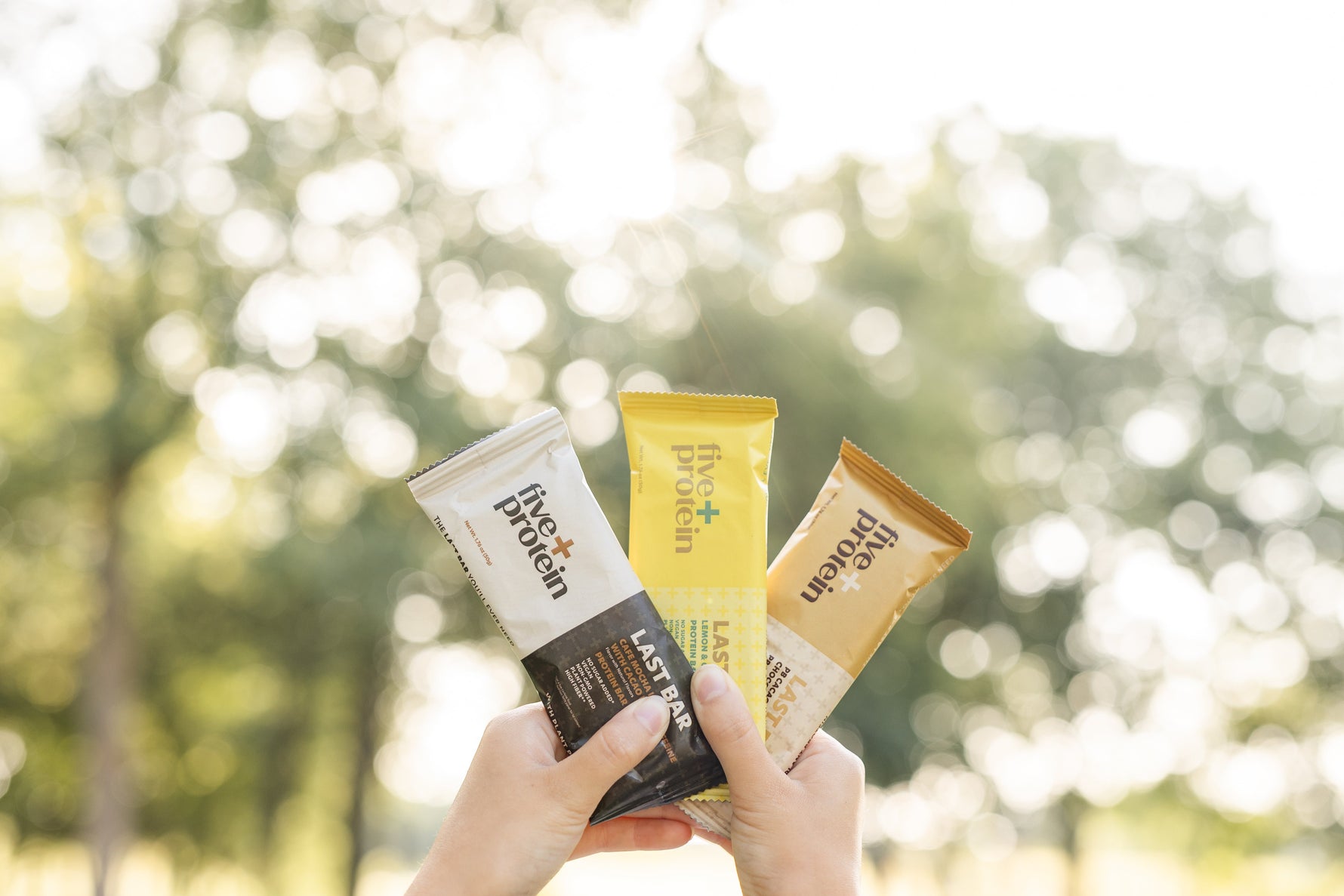
Not sure where to start? Five Plus Protein's sample box lets you try all three flavors, Peanut Butter Chocolate Chip, Lemon Ginger, and Cafe Mocha Latte, so you can discover which one becomes your go-to fuel for whenever your body needs it most. Because the best protein bar is the one you'll actually look forward to eating, whether that's before, after, or anytime in between.
Your body will tell you what works. Your job is simply to listen and provide it with the quality nutrition it deserves.